Choose your strainer type and see exactly what should be on the datasheet — and what needs an engineering decision.
Accessories
79 catalogued
Categories
8 groups
Strainer Types
8 covered
Status
Standard / Conditional
79
Accessories Catalogued
8
Accessory Categories
8
Strainer Types Covered
2
Specification Levels
02 — Overview
The accessories decide whether the strainer can be used
A strainer body on its own is only half a specification. Whether it can be monitored, drained, vented, opened safely, bypassed and cleaned depends entirely on the accessories specified with it — and those are decided at the datasheet stage, not after delivery.
The selector below is the cross-reference we work from. Choose a strainer type and it lists what we would treat as standard for that type, and what is conditional on the service or the project specification.
03 — Accessory Selector
Select your strainer type
Pick a strainer on the left; the accessories for it appear on the right.
Show
Choose a strainer
Accessories for Y / Wye Strainer
Standard Always required — must appear on the datasheet and purchase order
Conditional Service or project dependent — record the decision, never leave it blank
Conical and wafer / plate strainers are temporary-duty items, fitted for commissioning and start-up and removed afterwards — their schedules are correspondingly short. Schedules for the tee strainer, suction diffuser and wafer / plate strainer are derived from the equivalent body type and each product's own option list, and should be confirmed against the project requirement. All accessories must comply with the project piping material class for pressure rating, end connection, material grade and gasket type.
04 — Featured Accessory
Air Eliminator & Combination Air Eliminator Strainer
Positive displacement and turbine meters are volumetric devices — they cannot distinguish between liquid, air and vapour. Even a small air content is measured as product and contributes a measurable error. Large amounts of free air or entrained vapour do worse than distort the reading: they can overspeed the measuring unit, causing excessive wear or outright failure.
An air eliminator is fitted upstream of the measuring unit to remove vapour and free entrained air before the liquid reaches it. Where a strainer is also required — which on a metering installation it almost always is — the two are combined into a single combination air eliminator strainer, straining and de-aerating in one body and one set of flanges.
Operating principle. Velocity is reduced so bubbles can rise; accumulated air displaces liquid until the float-operated valve opens and vents it.
How it works
01
Velocity falls
The stream enters a vessel of much larger cross-section than the line, so velocity drops and the liquid comes to a state of relative calm.
02
Air and vapour rise
With the stream calmed, free air and vapour bubbles rise out of the liquid and collect in the space at the top of the vessel.
03
Liquid is displaced
As air accumulates at the top it displaces liquid volume, and the liquid level inside the vessel falls.
04
Float valve opens
Once the level reaches a predetermined point, the float-operated valve opens and the accumulated air and vapour are discharged.
05
Level recovers, valve closes
Liquid level rises again as the air is vented, and the float-operated valve closes. Discharge rate is regulated by back pressure on the outlet side.
Free air is easy. Entrained air is the engineering problem.
Free air
Air already present as discrete bubbles or a separated pocket. In most applications it is eliminated without difficulty — it rises as soon as the velocity is low enough and collects at the top of the vessel.
Entrained air
Air dispersed within the product and carried along with the stream. It has to be separated from the liquid and collected as free air before it can be discharged at all — which is what the retention time inside the vessel is for.
Viscosity governs how long that takes. In gasoline and other low-viscosity products, entrained air separates and rises quickly once velocity is reduced. As viscosity increases the rate of separation falls, and more retention time — and therefore a larger vessel for the same flow — is required to bring the air to the surface.
!
Back pressure is part of the specification.
Discharge rate is regulated by back pressure on the outlet side of the eliminator. Where the installation does not provide sufficient pressure differential to maintain a proper discharge rate, a back-pressure valve should be fitted downstream — this needs to be settled at design stage, not discovered during commissioning.
Sizing depends on flow rate, line size, operating pressure and temperature, product viscosity and the expected air content. Send those and we will confirm the configuration and whether a combination unit or a separate eliminator suits the installation.
05 — How to Specify
Getting the schedule right
Start from the strainer type — it sets which accessories are even applicable
Treat every standard item as a line on the datasheet, not an assumption
Resolve every conditional item explicitly and record the decision
Check each accessory against the project piping material class
Confirm cover handling — davit, lifting lugs or crane eye — against the actual cover weight
Include spares: one screen set and two cover gasket sets as a minimum
Provide nozzles, bosses and lugs at manufacture — field welding on the body is not a retrofit
Agree lock-out/tag-out and car-seal provisions with the operating philosophy
06 — FAQ
Common specification questions
A standard accessory is one we would expect on every strainer of that type — it should appear on the datasheet and the purchase order as a matter of course. A conditional accessory depends on the service, the fluid or the project specification. Conditional does not mean optional in the sense of unimportant; it means a decision has to be taken and recorded, never left blank.
A Y strainer has a smaller body, a bolted cover that one person can handle and a screen that is withdrawn by hand. A basket or duplex strainer is larger, its cover may exceed safe manual handling, and it is more often on continuous duty — so davit arms, quick-opening closures, lifting provision, ΔP instrumentation and blowdown arrangements move from conditional to standard.
Yes. Every accessory that forms part of the pressure boundary — valves, gauges, manifolds, gaskets, plugs and nozzles — must comply with the project piping material class for pressure rating, end connection, material grade and gasket type. An accessory selected outside the piping class becomes the weakest point in the assembly.
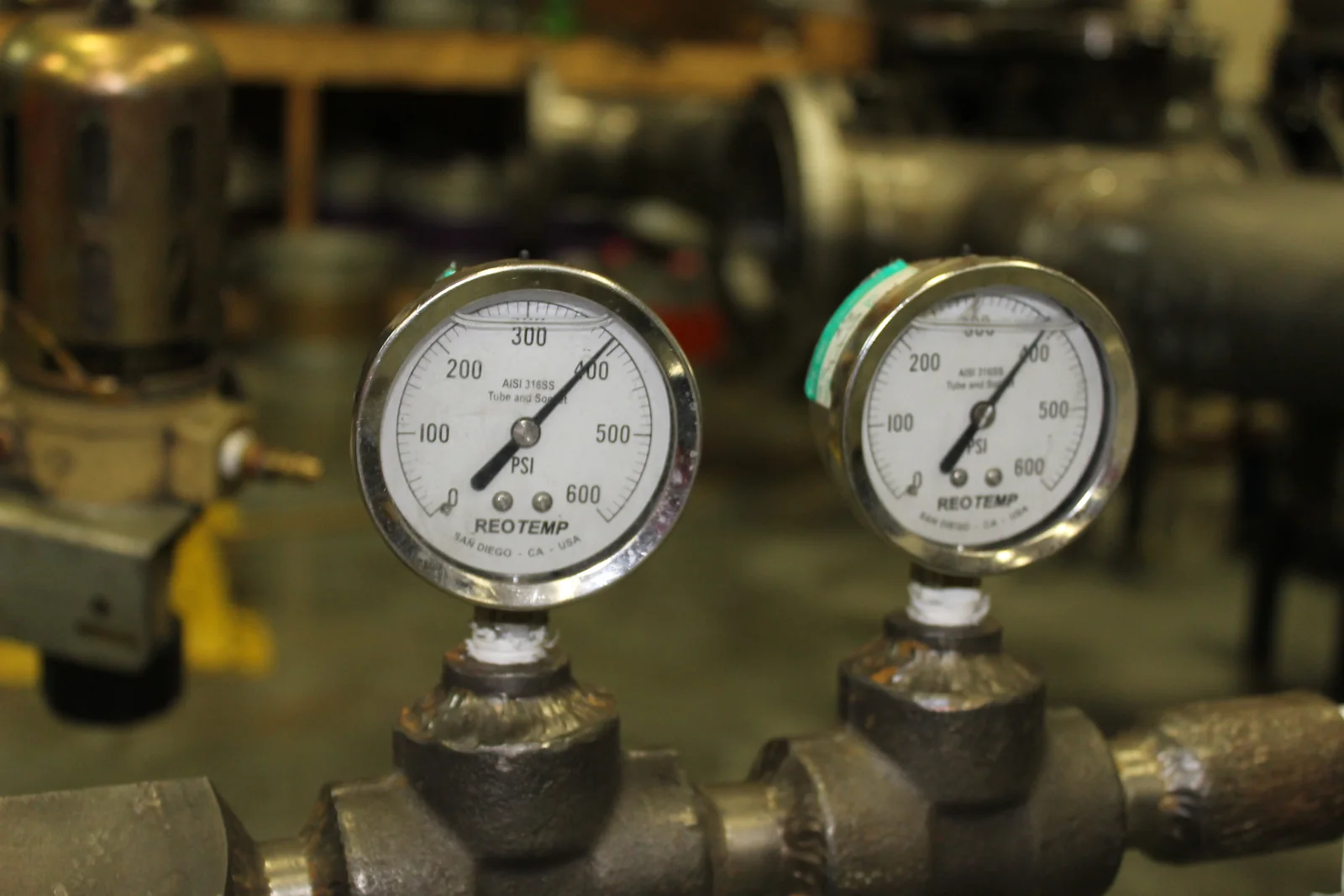
Pressure indication before opening a cover, safety interlocks or bleed devices on quick-opening closures, safety chains or lanyards on covers, lifting lugs and davit arms, earthing lugs, and lock-out/tag-out and car-seal provisions on drains and bypasses. These protect the person working on the strainer, not the process, and should not be traded away on cost.
The matrix identifies a minimum of one spare screen set and two spare cover gasket sets. A cover gasket is consumed every time the strainer is opened for cleaning, so a strainer with no spare gasket on site is a strainer that cannot be cleaned when it needs to be.
Some can — gauges, drain valves and instrumentation on existing nozzles. Many cannot. Anything requiring a body nozzle, a davit boss, a lifting lug, tracing connections or insulation support rings has to be provided at manufacture, because adding it later means welding on a pressure-containing part in the field.